
Open-Plan Living Zoning Tips That Make Large Rooms Feel Intentional
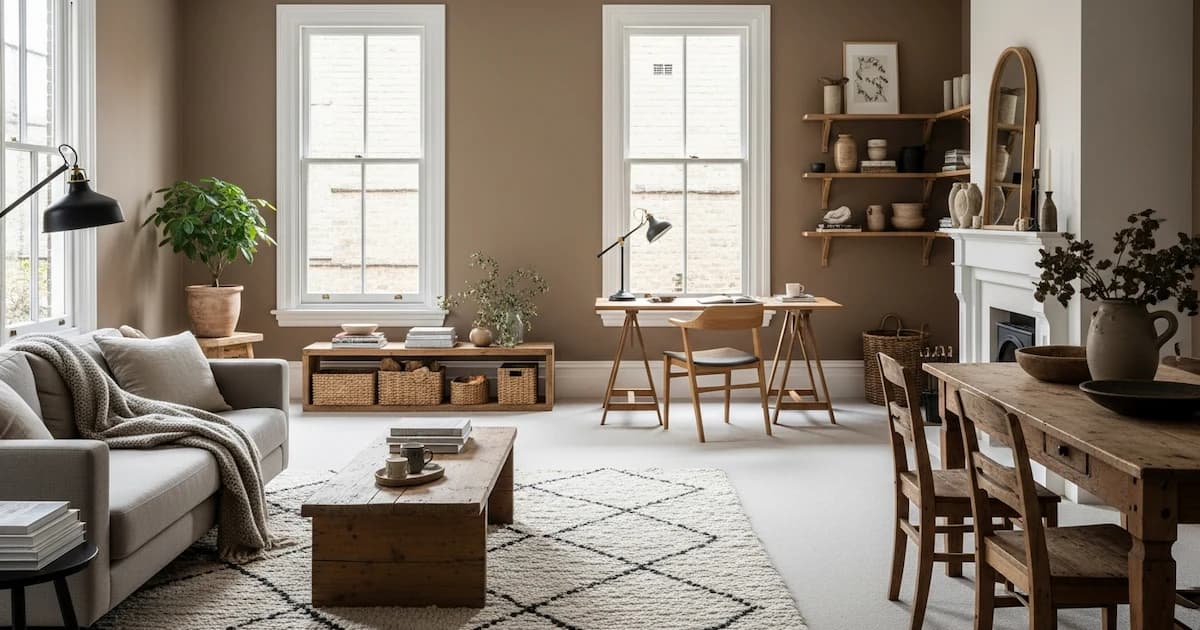
Use zoning, lighting, rugs, and furniture placement to create structure in an open-plan living space without closing it off.
Define each function before moving furniture
Open-plan rooms feel chaotic when several activities compete for the same visual center. Decide first where relaxing, dining, working, and circulation should happen. Many living room layout mistakes get amplified in open spaces. Once those priorities are clear, furnishing the space becomes much easier.
Think in zones with a clear purpose, not isolated furniture groupings. The room should support daily routines as one continuous experience.
Use visual boundaries instead of hard dividers
Rugs, pendant lights, console tables, shelving, and sofa orientation can all define areas without blocking light. This is especially helpful when you also need to fit in a home office setup. These softer boundaries preserve openness while still giving each zone a clear identity.
The best zoning tools are visible enough to guide the eye but subtle enough to keep the space flowing.
Repeat materials so the whole space still feels connected
If each zone uses completely different colors and finishes, the room starts to feel disconnected. Repeat one floor tone, one metal finish, and a small family of textiles throughout the space.
Cohesion allows every zone to feel distinct without looking unrelated. That is what makes open-plan design feel intentional rather than improvised.
Rugs are among the most effective zone markers in an open plan. See how to preview a rug in your living room before you commit to a size.
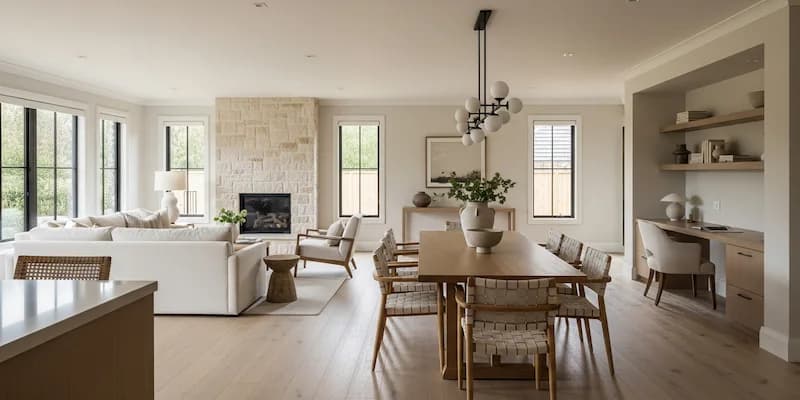
Map out open-plan zones visually before changing your layout in real life.
Learn more about AI room visualization →